It’s an exciting time for DRMP in North Carolina. As the state grows, more clients are turning to the firm for expertise in roadway design, traffic management, drainage, structures, survey, traffic impact analysis (TIA), and construction engineering and inspection (CEI). The firm is engaged in a mix of state, municipal, and private-sector projects, bringing local expertise and insight to projects. To support this growth, DRMP is expanding its roadway, traffic, structures, and drainage teams in North Carolina.
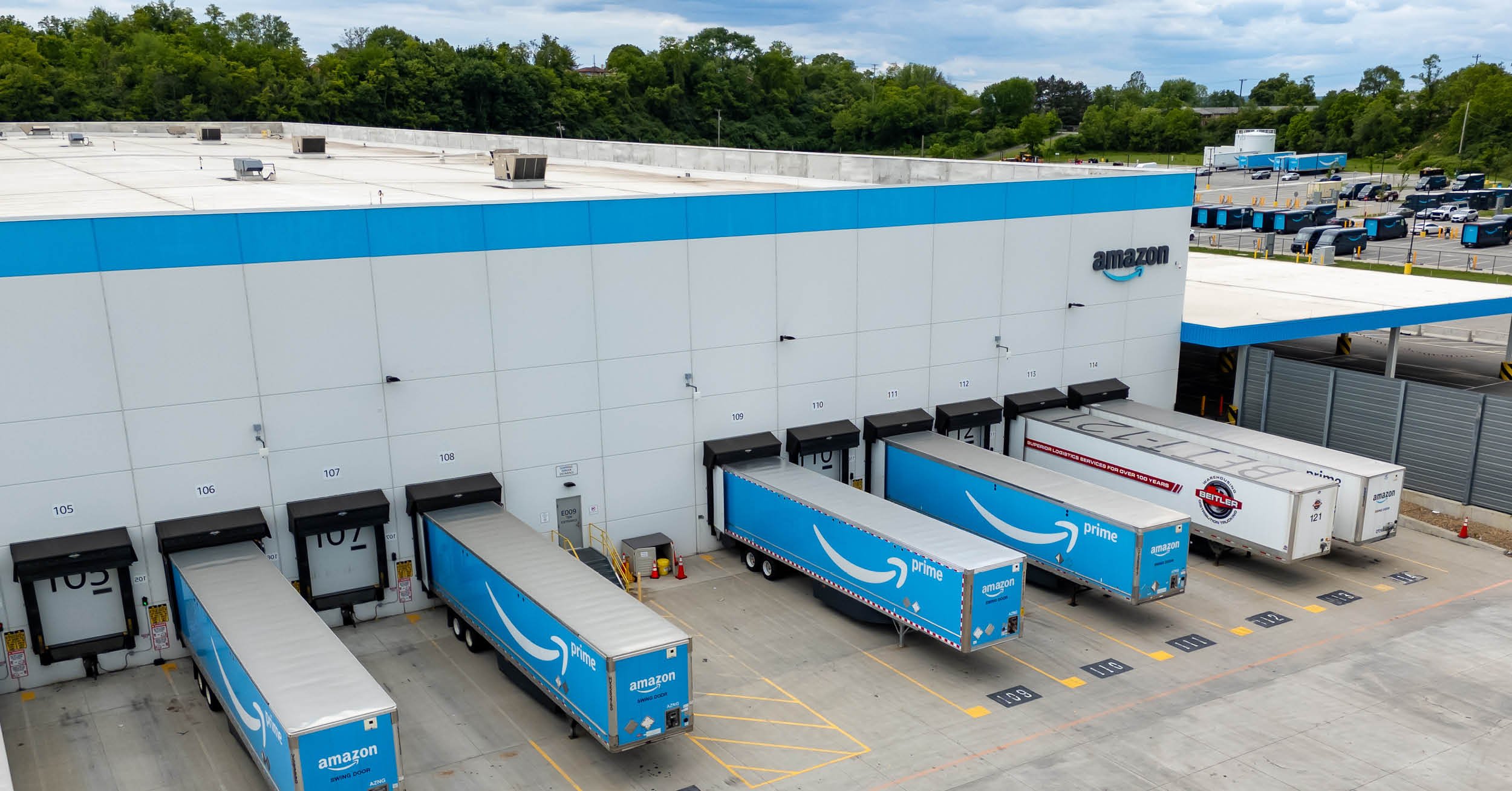
The acceleration of North Carolina’s population is increasing the need for resilient infrastructure, efficient transportation systems, and locally driven development, such as distribution centers for Amazon and FedEx. Meeting these challenges requires engineers who understand the region and can move projects forward quickly and effectively. DRMP’s competitive advantage lies in its North Carolina-based professionals who live and work in the communities they serve, allowing the firm to deliver responsive, relationship-driven solutions with true local insight.
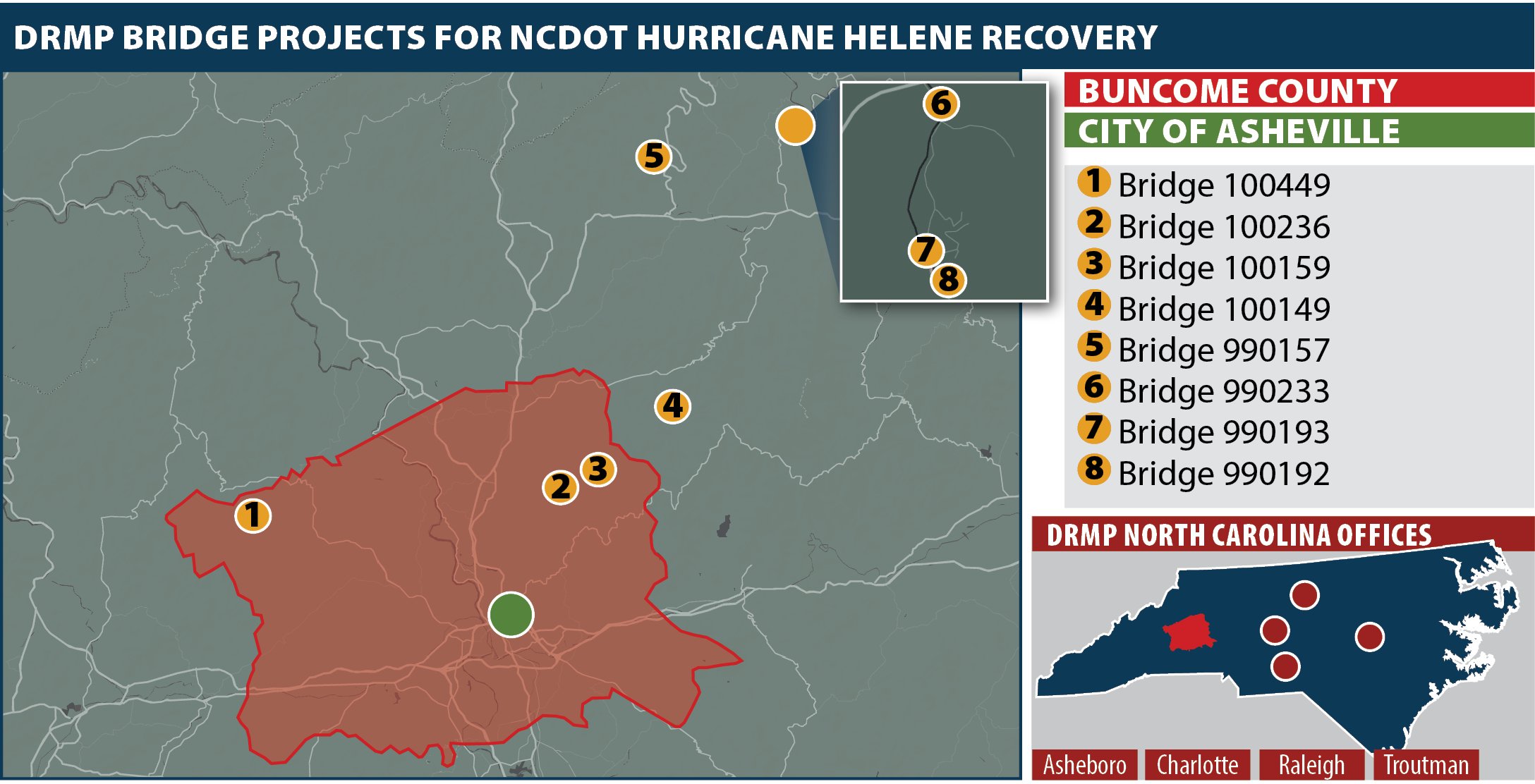
DRMP has several offices in key areas of the state, including Raleigh, Charlotte, Asheboro, and Troutman. By having staff who live and work in the communities they serve, the firm combines local knowledge with technical expertise to navigate North Carolina’s diverse landscapes, regulatory requirements, and complex infrastructure needs. As the team grows, DRMP continues to broaden its capabilities while strengthening long-term relationships with clients and partners.
Rapid Storm Recovery in the Mountains
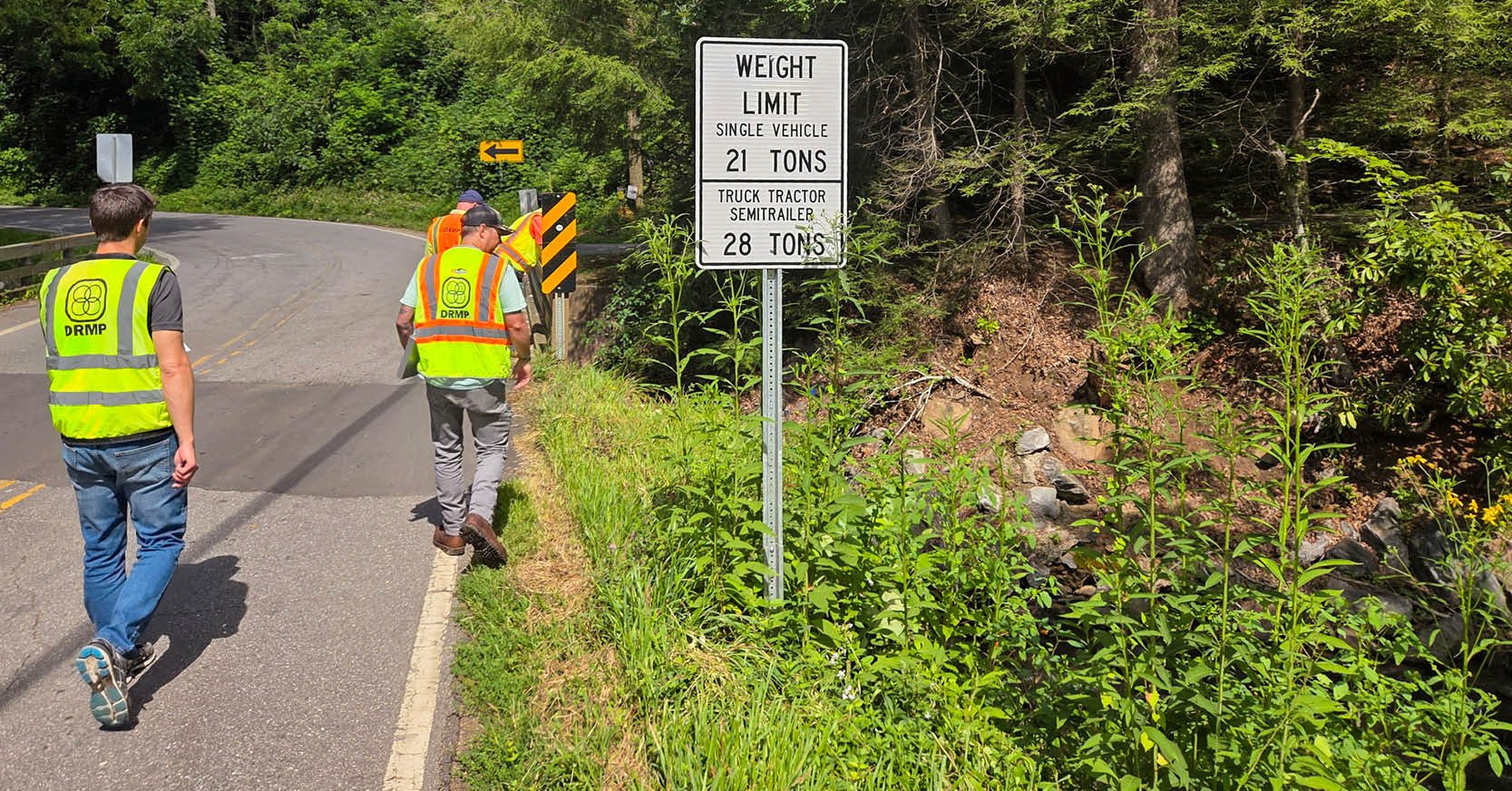
In western North Carolina, DRMP is playing a major role in Hurricane Helene recovery efforts through an express design-build partnership with Dane Construction. Serving as the prime consultant, DRMP is leading the design of eight bridges in North Carolina Department of Transportation (NCDOT) Division 13, all damaged or destroyed by the storm.
These bridges, located in steep mountainous terrain near Asheville are small but essential local crossings, many of which serve as the only access in and out for nearby residents. Each of the eight bridges spans a waterway and must remain accessible during construction, requiring on-site detours and temporary crossings built within extremely limited right-of-way, often squeezed between a mountainside and the stream below.
DRMP’s scope includes roadway and traffic design, maintenance of traffic, structural design, hydraulic and floodplain modeling, and erosion and sediment control. All bridges are designed to meet current codes and Federal Emergency Management Agency (FEMA) flood standards. Several crossings are located on FEMA-regulated streams, adding complexity to an already aggressive schedule. Each bridge is being designed and built simultaneously under an express design-build approach, allowing construction to start on each section as soon as the design is finished. Construction on the first bridge began during the first week of February, and work will continue through summer 2027.
What makes the effort successful is the level of coordination among DRMP’s disciplines. Roadway, structures, drainage hydraulics, and survey experts worked together from the earliest stages to share design constraints and requirements. Bridge geometry, foundation depths, roadway alignments, and hydraulic impacts are evaluated simultaneously to ensure constructability, safety, and resilience under 100-year and 500-year storm events. In a region where flooding can carry entire structures downstream as seen from Hurricane Helene’s damage, DRMP’s various disciplines must collaborate closely to succeed.
Engineering for a Diverse Landscape
North Carolina’s geography presents a wide range of challenges, including mountainous stream crossings, clay soils, and coastal lowlands. DRMP’s experts routinely tailor designs to local conditions, balancing regulatory requirements, environmental sensitivity, and constructability.
As infrastructure challenges vary across the state, DRMP continues to grow its drainage and roadway staff to ensure projects are supported by engineers with specialized regional expertise.
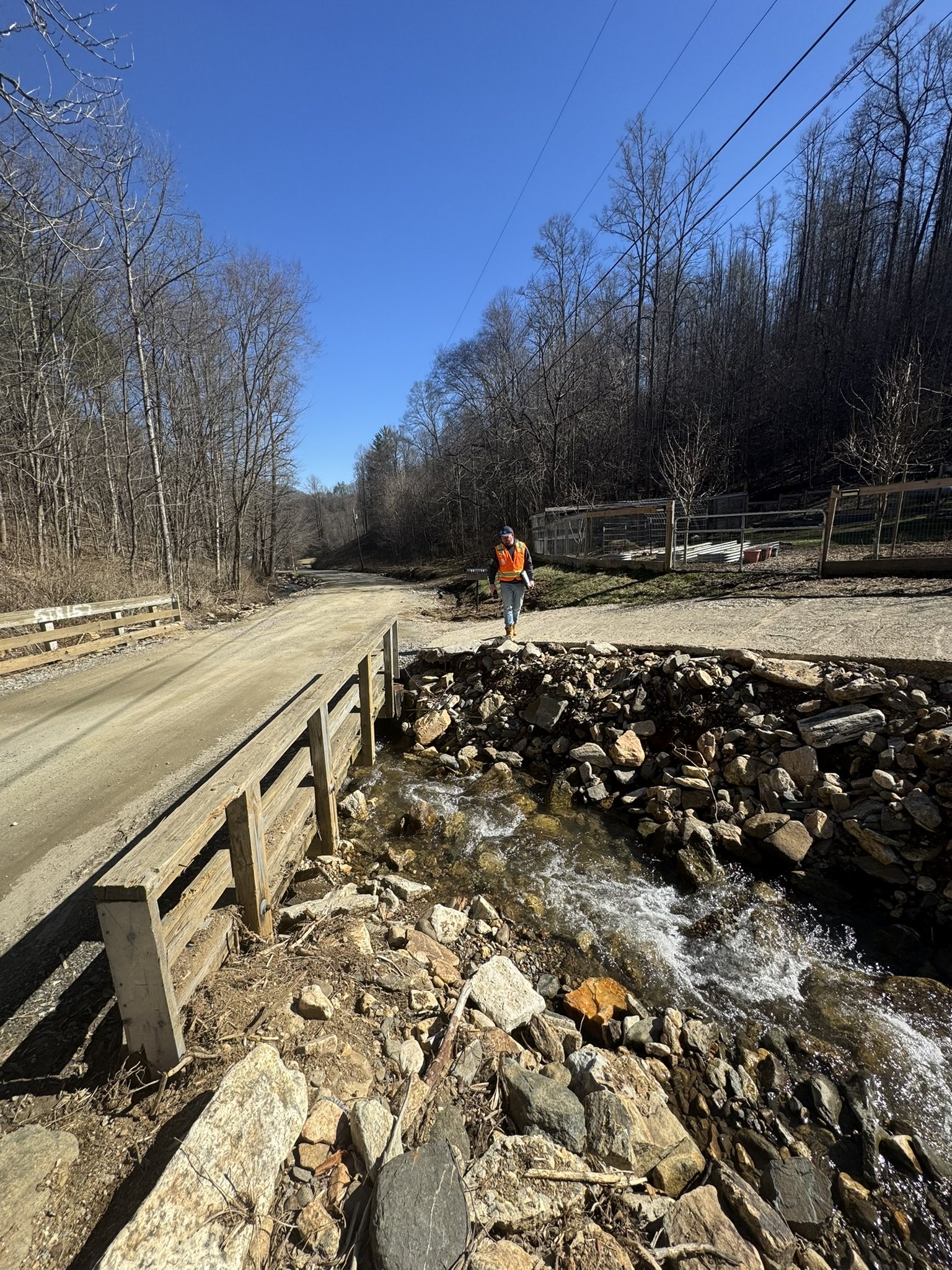
Unlike Florida where DRMP’s headquarters is located, drainage systems often must control high velocities, scour, and shear stress forces due to North Carolina’s topography. This requires a stronger emphasis on erosion control and stream hydraulics. Water quality stormwater control measures are incorporated into each design to ensure streams are protected from pollutants and debris. DRMP works closely with the North Carolina Department of Environmental Quality and NCDOT to meet these challenges, particularly in watersheds tied to drinking water supplies.
As rainfall intensity and flooding risks increase throughout the state, DRMP’s engineers are designing infrastructure that anticipates future conditions, especially as regulations evolve. The goal is not only to rebuild, but to build smarter and more resilient for the long term.
Managing Growth On and Off the Roadway
In addition to bridge and roadway design, DRMP’s traffic engineering and TIA experts support growth throughout North Carolina and the Southeast. The firm’s combined traffic and TIA group includes nearly 30 professionals across Charlotte and Raleigh. The TIA team is evenly distributed between both offices, while the traffic engineering team is primarily based in Charlotte. The traffic team plans to expand in Raleigh to create a strong and well-balanced regional presence.
DRMP’s TIA team provides services for private development projects throughout the United States, supporting residential, commercial, industrial, and manufacturing growth. Through its growing partnership with its Trilon Transportation partner firm, CPH, DRMP is now expanding its reach, providing TIA expertise on additional projects and opening new opportunities with a broader range of clients. National retailers, restaurants, and developers rely on the TIA team’s ability to evaluate local impacts and navigate agency coordination. Early involvement remains a key differentiator for DRMP’s TIA experts. By engaging clients early on and during site planning, DRMP helps clients optimize access, circulation, and signalization before designs are finalized, reducing redesign and improving outcomes for developers and the surrounding community. The firm also designs several hundred traffic signals each year, including advanced pedestrian safety treatments.
One recent example is DRMP’s partnership with its Trilon Transportation partner, Alta Planning + Design, on the South Prong Clarke Creek Greenway in Huntersville, N.C. DRMP is leading the design of a pedestrian hybrid beacon at Huntersville-Concord Highway and Hill Street. The user-activated crossing will improve safety and connectivity while supporting efficient traffic operations along a growing corridor.

DRMP also boasts a strong CEI team in the North Carolina region, providing critical oversight and quality assurance on major transportation and infrastructure projects. Its services have expanded into South Carolina as well. Examples include work on the I-40 widening project in partnership with NCDOT, leadership of CEI efforts for complex interchange improvements at I-40/I-77 in Statesville, DRMP’s first major CEI project for the South Carolina Department of Transportation’s (SCDOT) I-26 Midlands Connection Project in Columbia; and support for on-call CEI contracts across multiple NCDOT divisions, including roadway, bypass, and resurfacing projects throughout the state.
With expanding offices, a growing multidisciplinary team, and a strong backlog of North Carolina projects, DRMP continues to strengthen its reputation in the region. The firm has established a strong presence in North Carolina, expanded its footprint in South Carolina, and maintains a robust portfolio of projects that showcase its local knowledge and engineering excellence.