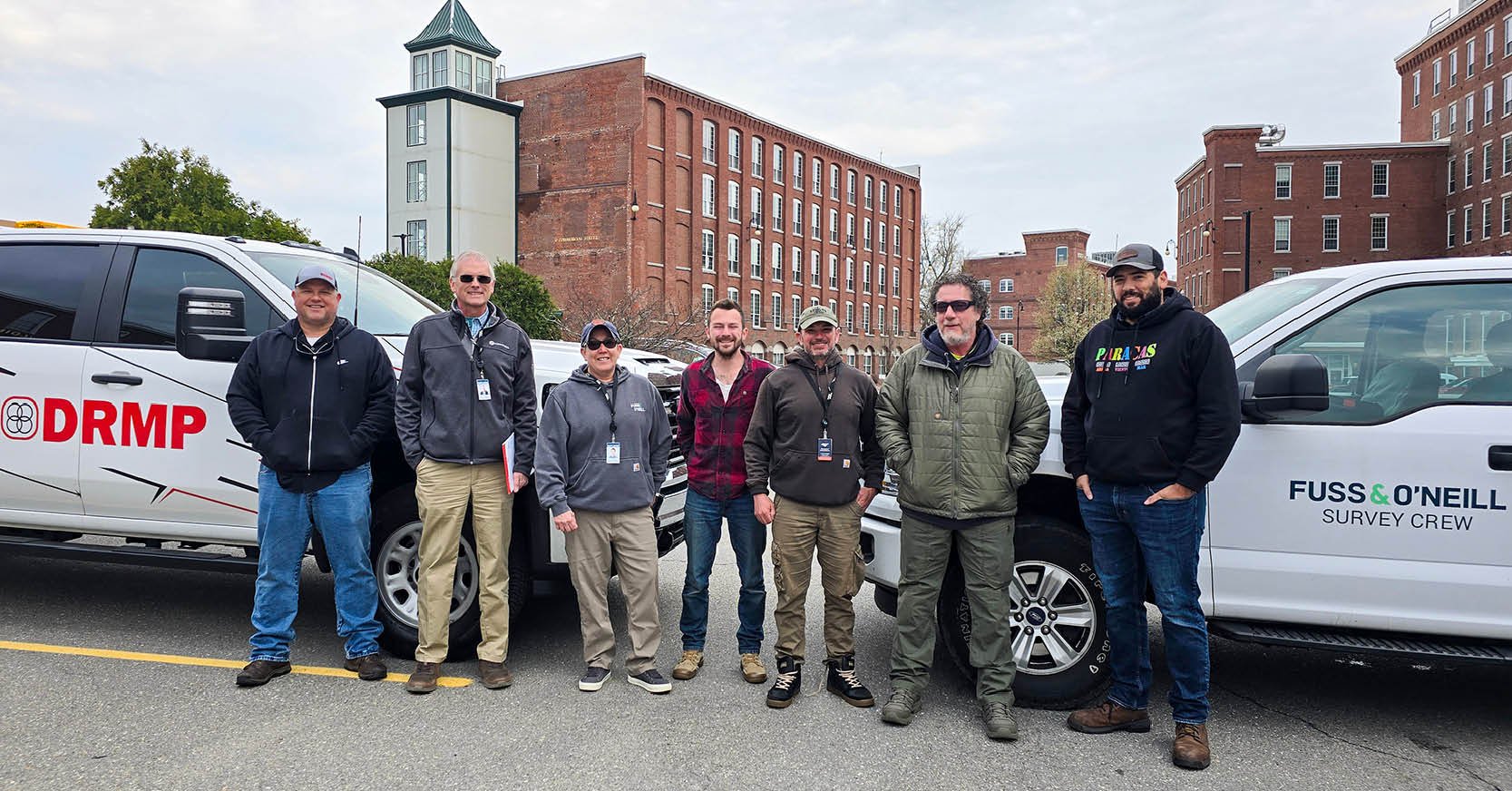
When fellow Trilon partner firm Fuss & O’Neill needed mobile LiDAR expertise for one of the largest survey projects in its New Hampshire office’s history, the firm turned to DRMP.
Supporting the New Hampshire Department of Transportation’s (NHDOT) widening of the F.E. Everett Turnpike (I-293) and exits 6 and 7 Interchange Reconstruction project (Manchester 16099), DRMP partnered with Fuss & O’Neill to deliver advanced mobile LiDAR scanning services along a 3.5-mile stretch of the turnpike in Manchester.
The project includes major improvements around exits 6 and 7 where roadway widening and interchange upgrades are planned through a constrained urban corridor bordered by the Merrimack River and Manchester’s historic Amoskeag Mill District. Once one of the world’s largest textile manufacturing centers, the district is now home to offices, technology space, and mixed-use development.
For DRMP, the project presented an opportunity to showcase the firm’s mobile LiDAR capabilities in the Northeast while helping a sister company safely and efficiently deliver complex survey data for a high-profile transportation project.
Mobile LiDAR Advantage
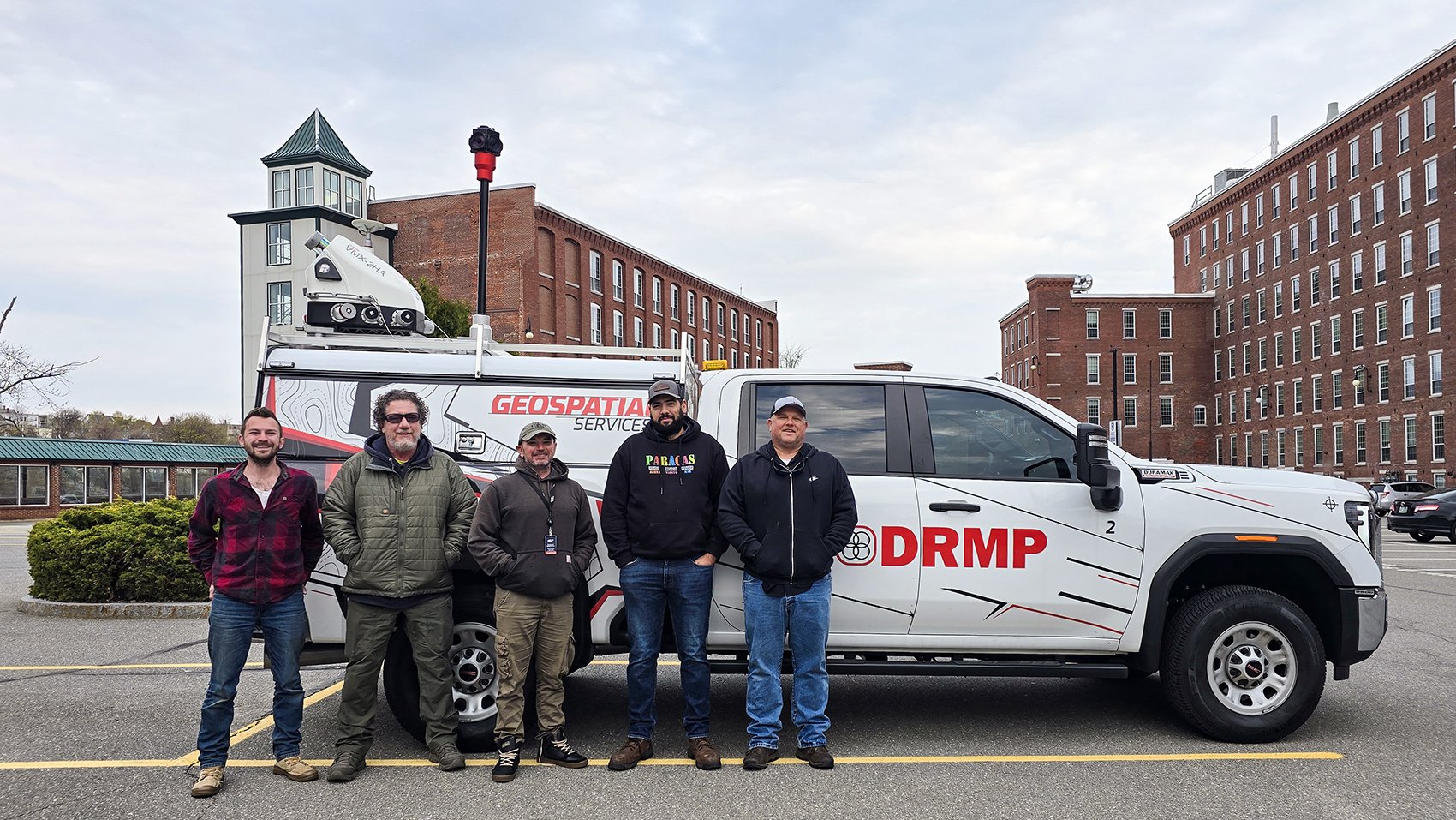
Fuss & O’Neill serves as the prime consultant for the survey portion of the project to provide conventional survey services throughout the corridor, while DRMP is leading the project’s mobile LiDAR data collection efforts as a subconsultant.
Traditional survey methods on an active, busy interstate often require extensive lane closures and expose field crews to potential traffic hazards. By incorporating mobile LiDAR technology, DRMP helped reduce those risks while significantly accelerating field operations.
“The collaboration went extremely smooth – smoother than I would have ever expected,” said Greg Brown, LLS, PLS, senior project manager at Fuss & O’Neill. “Everything moved quicker than I had anticipated, and our team got to see firsthand how DRMP’s mobile LiDAR process works in the field.”
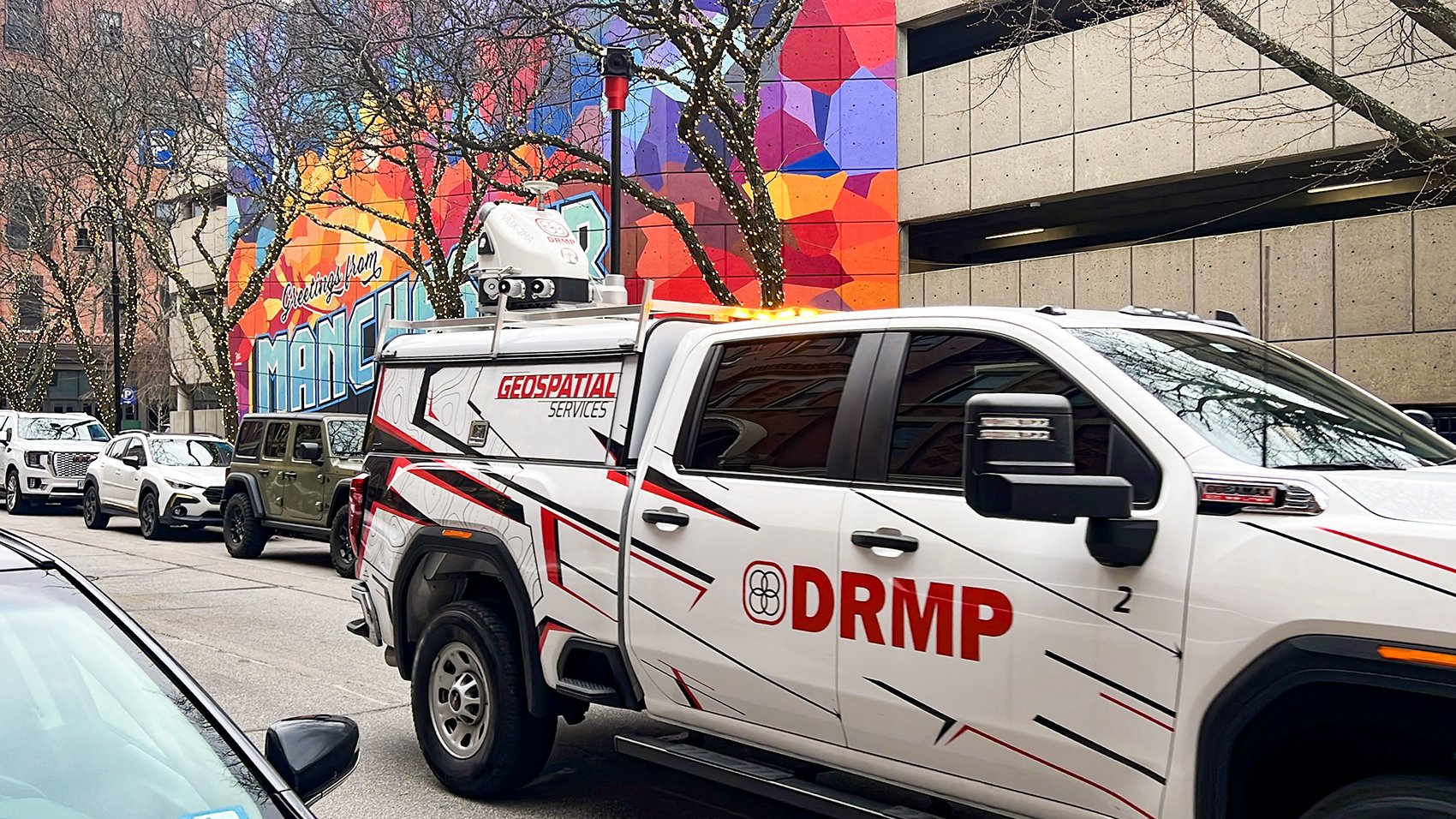
DRMP’s mobile LiDAR experts captured detailed roadway and hard-surface conditions throughout the corridor, while Fuss & O’Neill is performing conventional survey efforts for soft surfaces, such as grassy areas, right-of-way boundaries, and supplemental topographic data.
Together, the firms are creating a complete existing conditions model that will support the interim improvement project and future phases of corridor design. The interim project includes improvements along approximately 1.25 miles near exit 6 where NHDOT plans to widen portions of the roadway and add a merge lane to help alleviate congestion near the Amoskeag Circle. Although the immediate design effort is limited to the interim improvements, DRMP completed mobile LiDAR scanning for the entire 3.5-mile corridor, including city streets connecting to the interchanges, so NHDOT will have existing conditions data available for future phases of the F.E. Everett Turnpike widening project.
Coordinating Across States and Teams
DRMP crews drove up from North Carolina and worked with Fuss & O’Neill’s survey team to establish reference targets throughout the corridor for the mobile LiDAR scanning process, painting markings approximately every 500 feet. DRMP also provided a field template and demonstrated the target-painting process so Fuss & O’Neill’s crews could replicate the methodology on future projects. New Hampshire does not currently have established standards for mobile LiDAR target spacing or control requirements. Standards vary by state, with some requiring more control targets than others. DRMP Vice President and Geospatial Services Division Manager Brent Bass, PE, PSM, elected to use the more restrictive standards of 500 feet, as required by the Florida Department of Transportation (FDOT) and the North Carolina Department of Transportation (NCDOT), to ensure the highest level of accuracy and consistency in the dataset.
DRMP’s scanning survey team flew from Florida to North Carolina to pick up its second mobile LiDAR scanning vehicle stationed in the Carolinas before making the approximately 14-hour drive to New Hampshire to support the project. Once on site, the team met with Fuss & O’Neill staff for a hands-on “show and tell” of the equipment and workflow so both teams could align on the field process and expectations before work began.
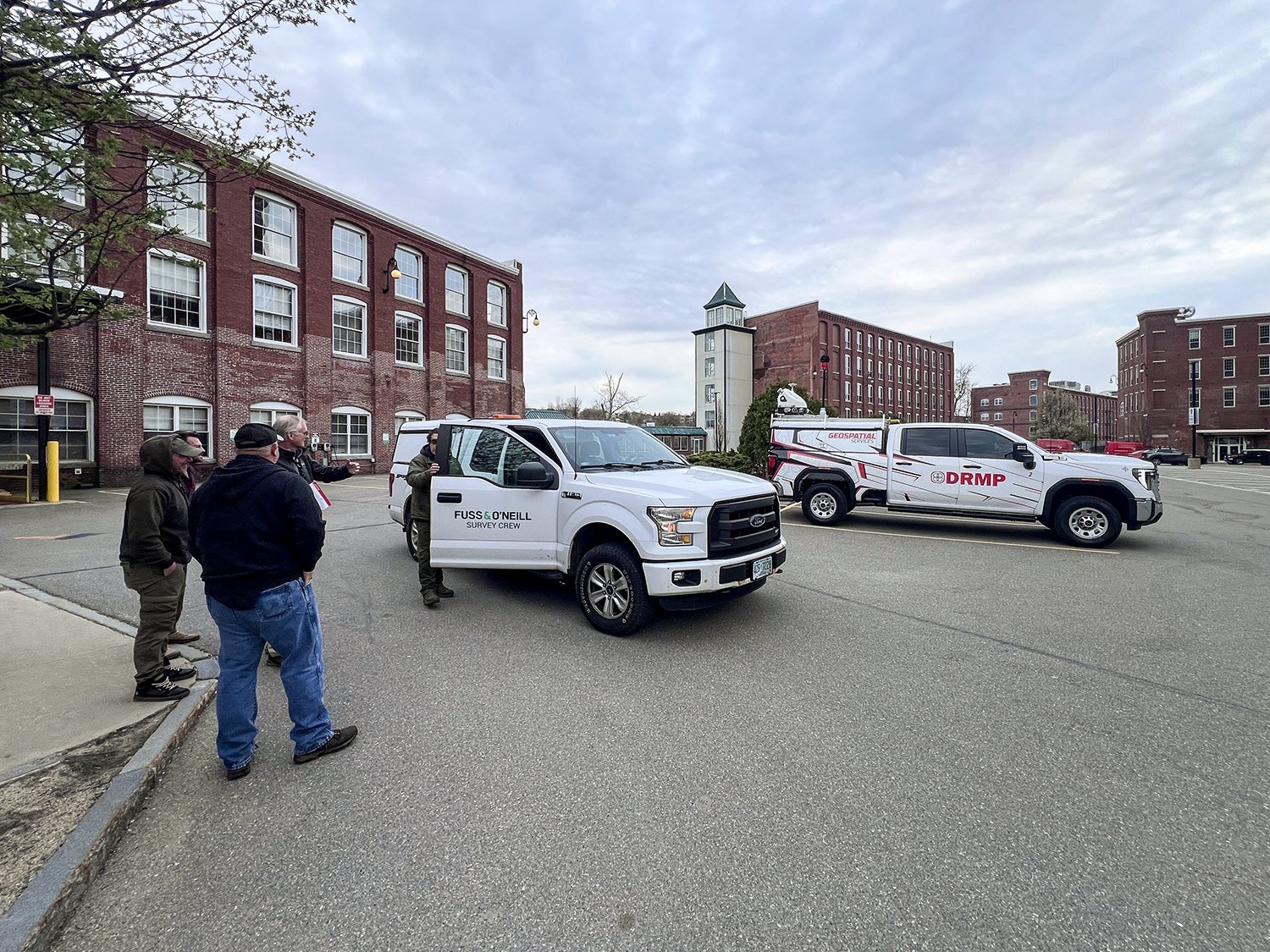
Fuss & O’Neill’s survey crews collected precise ground coordinates at these control and validation points. Those reference points allow for the scanned data to be properly positioned so it matched exact locations along the project corridor.
Demonstrating the Value of Mobile LiDAR
While mobile LiDAR has become increasingly common on transportation projects nationwide, the technology was still relatively new to some project stakeholders in New Hampshire.
Initially, DRMP was only tasked with scanning the interim improvement area, approximately 1.25 miles. After seeing the benefits of the technology, however, NHDOT expanded the scope and requested scanning for the entire 3.5-mile corridor so the data would already be available for future design phases.
Following data collection, DRMP will begin processing the point cloud data and performing feature extraction to develop a comprehensive 3D model of the corridor.
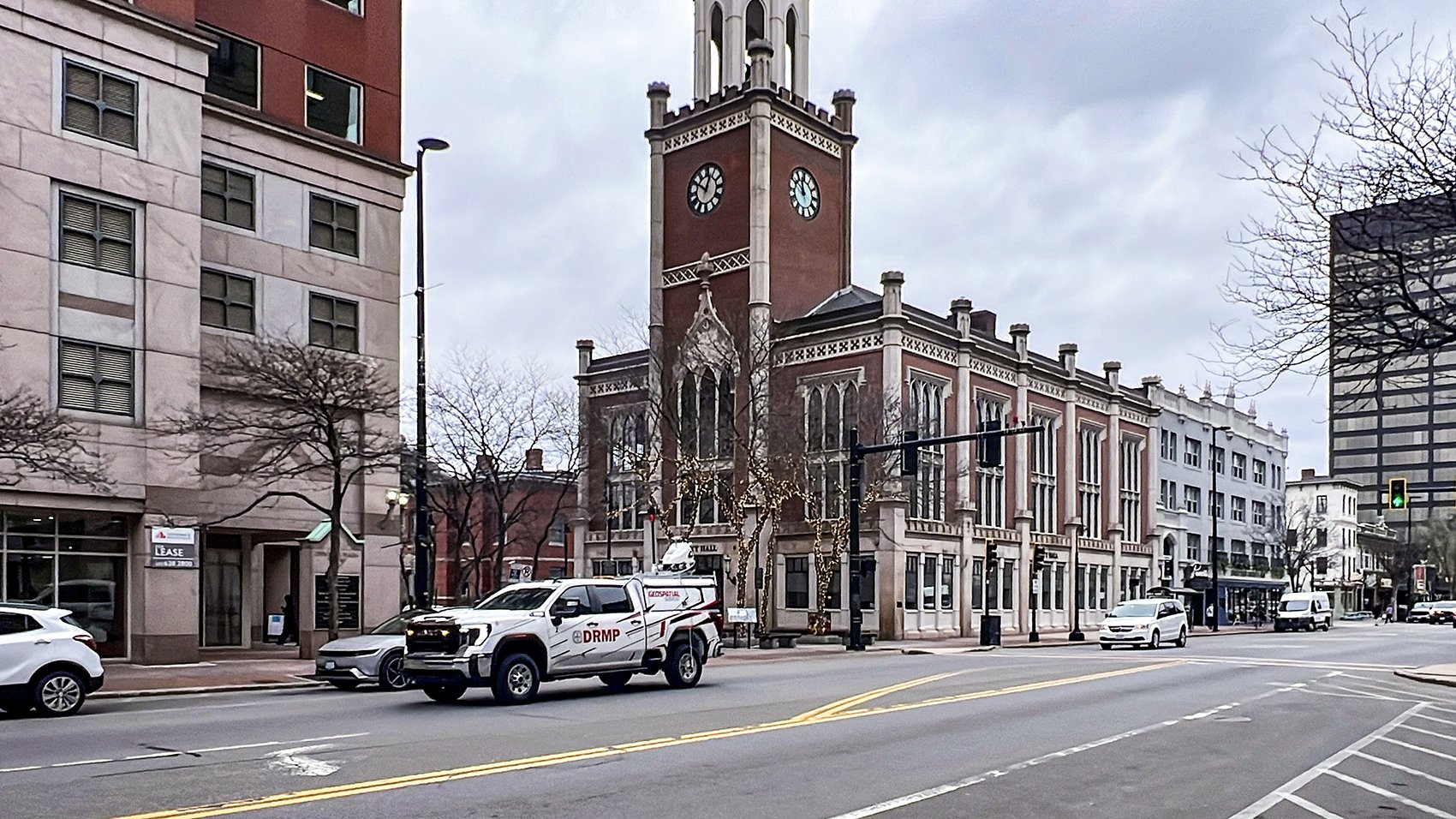
“This project went very smooth,” Bass said. “It required a lot of logistics planning. It couldn't have gone any better. The Fuss & O'Neill team has been just absolutely wonderful to work with.”
This project is a prime example of the value of collaboration across the Trilon platform, combining DRMP’s mobile LiDAR expertise with Fuss & O’Neill’s local survey knowledge and established client relationships. The combined effort will deliver a coordinated, data-rich solution supporting NHDOT’s turnpike improvements with advanced technology and expertise.